
Power Transmission Systems – Types, Components & Industrial Applications
What Is Power Transmission Equipment?
Power transmission systems are mechanical systems designed to transfer power and motion from a prime mover, such as an electric motor or engine, to driven machinery. They use components such as gears, chains, belts, couplings, shafts, and clutches to transmit torque and rotational power efficiently.
Power transmission systems play an essential role in industrial machinery, helping equipment operate smoothly, efficiently, and reliably.
Structure of Power Transmission Equipment
Power transmission equipment comes in various designs and configurations depending on the application. A typical system may consist of gears, belts, shafts, sprockets, couplings, or other mechanical components.
Key factors to consider when selecting power transmission equipment include:
- Gear type and configuration
- Horizontal, vertical, or flange mounting
- Transmission ratio
- Torque and power requirements
- Operating speed
- Load and operating conditions
Selecting the right components for each application helps ensure efficient power transmission and reliable machine performance.
What Are the Main Types of Mechanical Power Transmission?
Mechanical power can be transmitted in several ways depending on the machinery and application. Common power transmission methods include:
- Gear Drives
- Chain Drives
- Belt Drives
- Clutches
- Shafts
- Couplings
Each type offers different advantages and is suitable for specific industrial applications.
Gear Drives
Gears are mechanical components used to transmit rotational motion and torque between shafts. Power is transferred through the meshing teeth of two or more gears.
Gear drives are widely used in industrial machinery because they provide precise and reliable power transmission and can handle demanding torque and load requirements.
Chain Drives
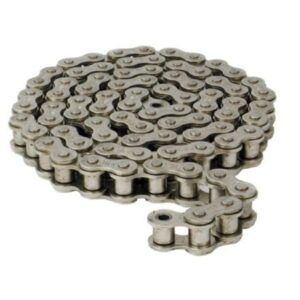
Chain drives transmit mechanical power from a driving shaft to a driven shaft using a chain and sprockets.
The chain engages with the teeth of the sprockets mounted on the driving and driven shafts, allowing rotational power to be transferred efficiently.
Chain drives are commonly used in conveyors, manufacturing machinery, material handling equipment, agricultural machinery, and other industrial applications.
Belt Drives
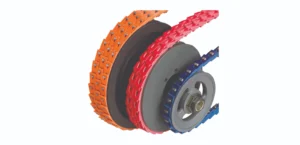
Belt drives transfer rotational power from a motor or other power source to driven machinery using belts and pulleys.
They provide a simple and efficient method of power transmission and are widely used in industrial machinery, ventilation systems, pumps, compressors, and many other applications.
The appropriate belt type and size should be selected based on power requirements, operating speed, load, temperature, and environmental conditions.
Clutches
Clutches are mechanical devices used to engage or disengage power transmission between a driving component and a driven component.
They allow machines to control the transfer of torque and rotational motion and are commonly used in vehicles, motorcycles, compressors, chain saws, and industrial machinery.
Common clutch designs include:
- Dry Clutches – Use air for cooling and generally offer simple maintenance and low power losses.
- Wet Clutches – Operate in an oil environment, providing smoother engagement and improved heat dissipation.
The appropriate clutch type depends on the required torque, speed, operating conditions, and application.
Shafts
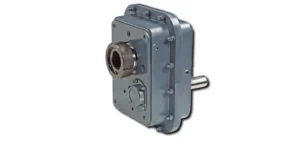
Shafts are rotating mechanical components used to transmit torque and support other machine components such as fans, pulleys, gears, and couplings.
For example, an industrial ventilation fan may have blades mounted on a shaft supported by bearings. A pulley can be mounted on one end of the shaft to receive rotational power from an electric motor and transfer that power to the fan.
The shaft and its supporting bearings must be properly selected and aligned to ensure smooth operation, minimize vibration, and maintain reliable machine performance.
Choosing the Right Power Transmission Components
Selecting the correct power transmission components is essential for maintaining machine efficiency, reliability, and service life.
Before selecting a component, consider:
- Required power and torque
- Operating speed
- Load characteristics
- Transmission ratio
- Installation space
- Operating temperature
- Environmental conditions
- Maintenance requirements
- Expected service life
Using the right combination of gears, chains, belts, shafts, couplings, and clutches can improve power transmission efficiency and help reduce unexpected downtime and maintenance costs.
Power Transmission Solutions from Bearings Specialist
Bearings Specialist provides a comprehensive range of industrial power transmission products and solutions for various manufacturing and industrial applications.
Our product range includes bearings, power transmission belts, chains, gears, couplings, gear drives, seals, conveyor components, and maintenance tools.
With technical knowledge and experience in industrial power transmission, our team can help you select suitable products based on your machinery, operating conditions, and application requirements.
Choose Bearings Specialist for reliable power transmission solutions for industrial applications.
