







Bearings
Types of Ball Bearings
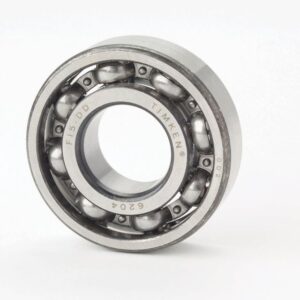
Deep-Groove Ball Bearings
Deep-groove ball bearings are among the most widely used types of ball bearings in industrial and commercial applications. They are designed primarily to support radial loads while also accommodating moderate axial loads in both directions.
Thanks to their simple and efficient design, deep-groove ball bearings are easy to install and available in open, shielded, and sealed configurations. Sealed and shielded designs can also help protect the bearing from contaminants while reducing lubrication and maintenance requirements.
With their high-speed capability, quiet operation, and smooth rotational performance, deep-groove ball bearings are commonly used in electric motors, pumps, fans, household appliances, conveyors, and general industrial machinery.
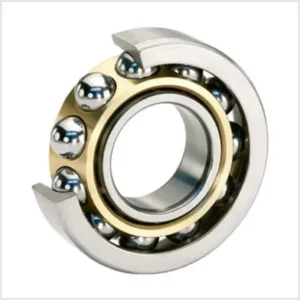
Angular-Contact Ball Bearings
Angular-contact ball bearings are designed with raceways positioned at an angle, allowing them to support combined radial and axial loads efficiently. This configuration makes them particularly suitable for applications where accurate shaft positioning, high rotational speeds, and rigidity are important.
Because axial loads are supported primarily in one direction, angular-contact ball bearings are often mounted in pairs or multiple arrangements to accommodate axial loads from both directions. Different mounting configurations can also provide increased rigidity and improved load distribution.
These bearings are widely used in high-speed spindles, pumps, compressors, machine tools, precision equipment, and other demanding industrial applications.
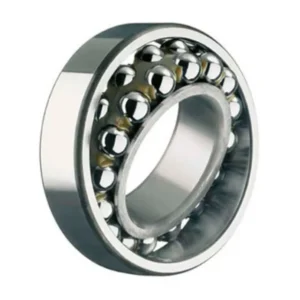
Self-Aligning Ball Bearings
Self-aligning ball bearings feature a spherical raceway in the outer ring, allowing the bearing to automatically compensate for shaft misalignment and certain mounting inaccuracies.
This self-aligning capability makes them especially suitable for applications with long shafts or operating conditions where perfect alignment is difficult to maintain. By accommodating angular misalignment, these bearings can help reduce unnecessary stress on the bearing, shaft, and housing.
Self-aligning ball bearings are commonly used in conveyors, fans, agricultural machinery, textile equipment, and other industrial applications where shaft deflection or installation misalignment may occur.
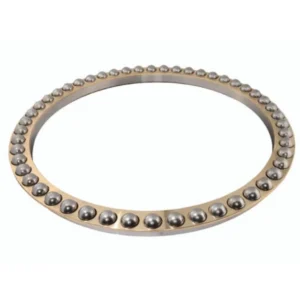
Thrust Ball Bearings
Thrust ball bearings are specifically designed to support axial or thrust loads along the shaft. Unlike radial bearings, they are primarily intended for applications where axial force needs to be controlled and supported efficiently.
Their design provides smooth operation and low friction under appropriate operating conditions, making them suitable for moderate-speed applications with predominantly axial loads.
Thrust ball bearings are commonly used in automotive steering systems, turntables, machine tools, low-speed gearboxes, and other equipment where reliable axial load support is required.
Types of Roller Bearings
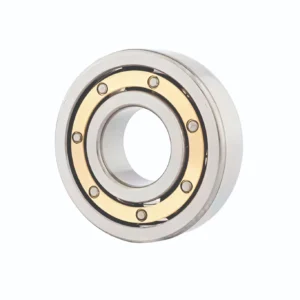
Cylindrical Roller Bearings
Cylindrical roller bearings use cylindrical rollers that provide line contact with the raceways, enabling them to support high radial loads while maintaining excellent rigidity.
Their efficient rolling design helps reduce friction and allows many configurations to operate at relatively high rotational speeds. Depending on the bearing design, certain types can also accommodate axial displacement, making them suitable for applications affected by shaft expansion or thermal movement.
Cylindrical roller bearings are commonly used in electric motors, gearboxes, generators, pumps, machine tools, and industrial machinery.
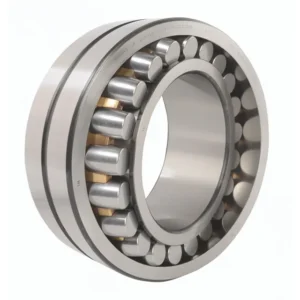
Spherical Roller Bearings
Spherical roller bearings are designed with a self-aligning structure that allows them to compensate for shaft misalignment and housing deflection. This makes them particularly suitable for heavy-duty equipment operating under demanding conditions.
In addition to supporting high radial loads, spherical roller bearings can accommodate axial loads in both directions, depending on the application and bearing configuration. Their robust construction also makes them suitable for environments involving vibration, shock loads, and shaft deflection.
They are widely used in conveyors, crushers, mining equipment, paper and pulp machinery, fans, gearboxes, and other heavy industrial applications.
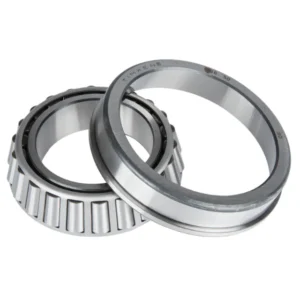
Tapered Roller Bearings
Tapered roller bearings use tapered rollers and angled raceways to efficiently support combined radial and axial loads. Their geometry allows the bearing to handle significant directional forces while maintaining high rigidity and load-carrying capacity.
Because of their ability to manage combined loads, tapered roller bearings are commonly used in automotive wheel hubs, gearboxes, differentials, heavy machinery, and industrial equipment.
Depending on the application, tapered roller bearings may also be adjusted or mounted in pairs to provide the required preload, clearance, and support for axial loads in different directions.
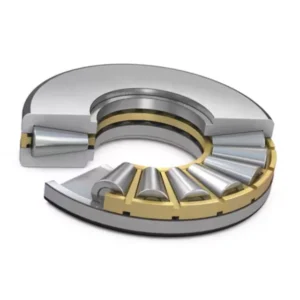
Thrust Roller Bearings
Thrust roller bearings are specifically designed to support heavy axial loads along the shaft. They are primarily used in applications where significant thrust forces must be managed reliably.
Depending on the design, thrust roller bearings can provide high axial load capacity and improved durability for demanding industrial operations. Different roller configurations are available to meet specific requirements for load, speed, alignment, and operating conditions.
They are commonly used in gearboxes, cranes, extruders, rotary tables, heavy machinery, and other equipment where effective axial load management is essential.
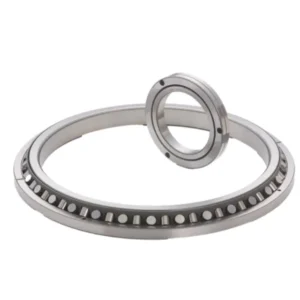
Crossed Roller Bearings
Crossed roller bearings arrange cylindrical rollers alternately at right angles within a compact bearing structure. This design allows a single bearing to support radial loads, axial loads, and tilting moments simultaneously.
Their high rigidity and precision make crossed roller bearings particularly suitable for applications where installation space is limited but accurate rotational movement is essential.
Crossed roller bearings are widely used in robotics, rotary tables, machine tool turrets, medical equipment, precision measuring systems, and automation equipment.
By combining multiple load-handling capabilities into a single compact bearing unit, they can also simplify mechanical design and reduce the number of components required.
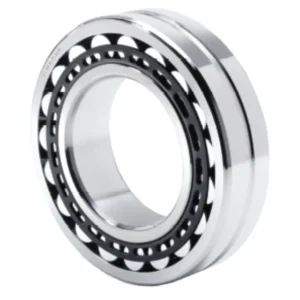
CARB Toroidal Roller Bearings
CARB toroidal roller bearings are designed to combine self-aligning capability with the ability to accommodate axial displacement within the bearing.
This unique design allows the bearing to compensate for shaft misalignment while also accommodating thermal expansion and contraction. As a result, CARB toroidal roller bearings can be particularly useful in applications with long shafts or significant thermal movement.
They are commonly used in paper mills, pulp processing equipment, fans, blowers, and other industrial machinery where shaft expansion, misalignment, and operating reliability must all be considered.
By combining misalignment compensation and axial displacement capability in one bearing, CARB bearings can help simplify bearing arrangements and support long-term equipment performance.
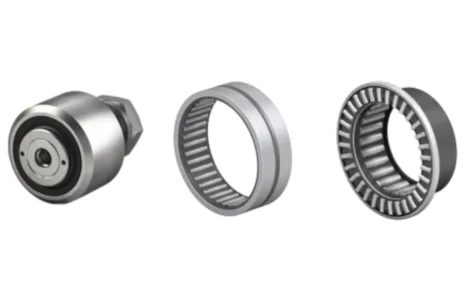
Needle Roller Bearings
Needle roller bearings use long, thin cylindrical rollers, allowing them to provide high radial load capacity within a compact cross-sectional design.
Their space-saving construction makes them an excellent choice for applications where installation space is limited but reliable load support is still required.
Despite their compact dimensions, needle roller bearings are capable of supporting substantial radial loads and are widely used in automotive transmissions, pumps, compressors, gear systems, rocker arms, and other compact mechanical assemblies.
Our Authorized Brands
Why Choose Bearings Specialist?
● Bearings from Leading Brands — Timken, NSK, Link-Belt, Sealmaster, McGill, NIS, and Momentum, supporting a wide range of industrial machinery and applications.
● Wide Range of Bearing Types — Including Ball Bearings and Roller Bearings such as Deep-Groove, Angular-Contact, Self-Aligning, Thrust, Cylindrical, Spherical, Tapered, Needle, and Crossed Roller Bearings.
● Technical Guidance — Expert assistance in selecting the appropriate bearing type, size, and specifications based on application requirements, load, speed, and operating conditions.
● Maintenance and Replacement Support — Suitable for Maintenance, Repair, and Replacement requirements, as well as bearing sourcing for industrial machinery and equipment.
● Solutions for Diverse Industries — Bearings for motors, pumps, conveyor systems, gearboxes, machine tools, automotive applications, heavy machinery, and power transmission systems.
● Application-Focused Solutions — Helping customers select the right bearings for their specific requirements to support machinery performance, reliability, and long service life.